
In Plain Sight
“The spies I worried about stole trade secrets, and we had a lot of them.”

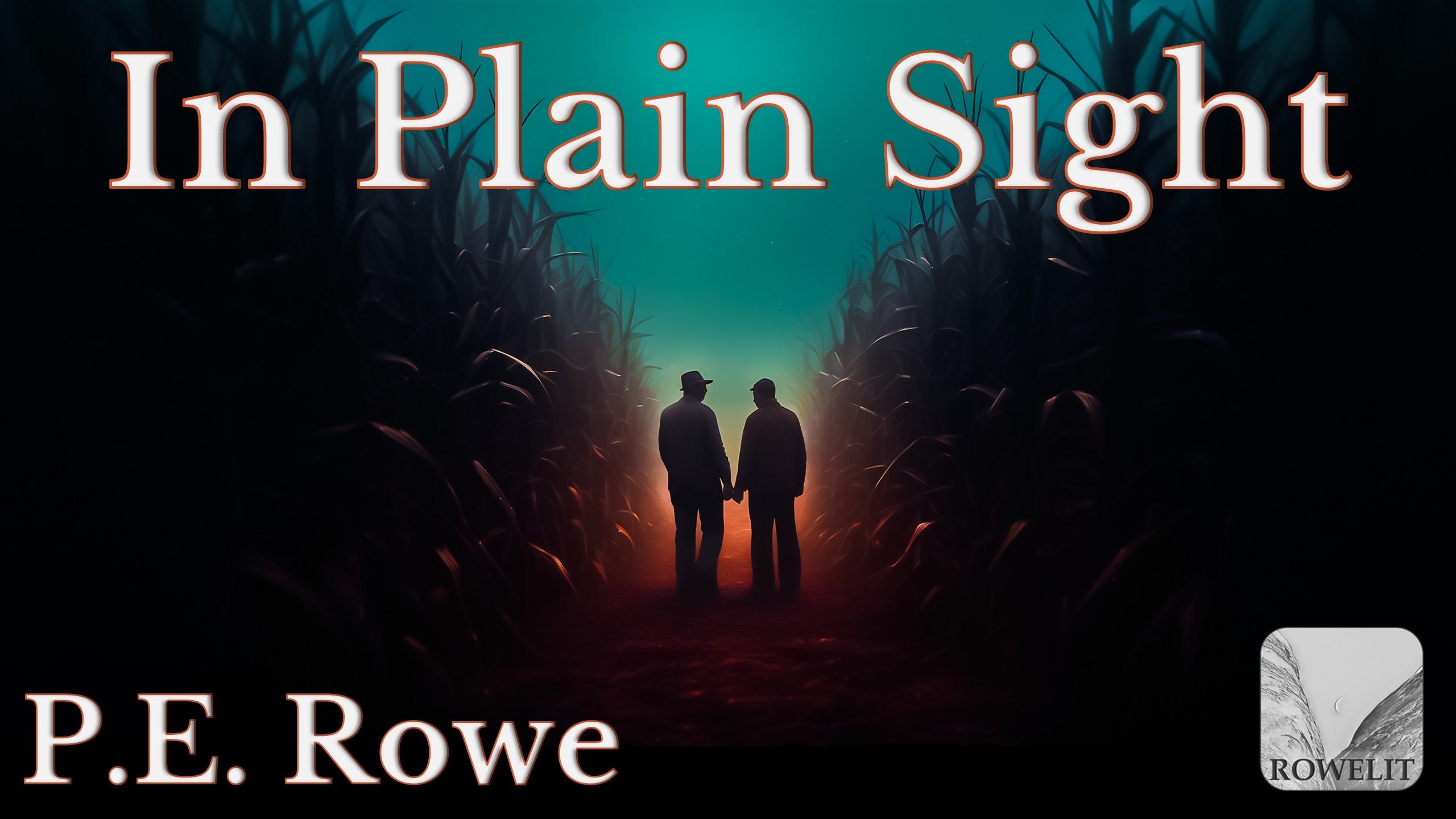
Julian Hartsock. “In Plain Sight.” Precipice: The Autobiographical Ramblings of Julian Hartsock. (Chapter) A & A Publications, 2123.
EXTRAVERSION (Assertiveness)—(Hartsock, Julian Q.) 84th Percentile:
Assertiveness (EA) is the psychometric measure assigned to an individual’s tendency to be decisive and forceful in social circumstances, especially where social capital is on the line. Individuals high in Assertiveness are willing and even quick to speak up when they disagree with others or have something to say. They rarely allow themselves to be walked over or have their feelings or input overlooked. People high in Assertiveness are not necessarily disagreeable, though they rarely struggle to contradict authority or go their own way when they genuinely disagree with the crowd or established authority. Assertive people stand by their beliefs where less assertive people typically fold.
A score in the (84th) percentile, coupled with the distribution profile of psychometric measures herein, suggests a quietly dominant personality, prone to certainty in leadership, though said leadership may not always be well spelled out for followers. While relatively low scores in both facets of Agreeableness (Compassion & Politeness), as well as the peerless Intelligence score (G), might suggest a cold, callous leadership style, low Volatility, extremely high Openness, and low Misanthropic Tendency would suggest a balanced rather than hardheaded mindset. Though the subject would likely prefer solitude in his work, the constellation of psychometric scores in this profile suggests he would be well suited to leadership if the necessity or opportunity arose.
I was not the least bit surprised by this score from MM³. I was always decisive, even as a kid when I couldn’t make the decisions for myself. If I didn’t like the way dad did something, I’d remember. I’d tell myself I was going to do it differently as soon as I got the chance. And the moment I felt the time was right for me to strike out on my own, I did. I left. I started making the decisions for myself when I was fifteen. That I was assertive was not a revelation. Gladstone et al. scored my Assertiveness identically—84, and their typically limited feedback read as follows: High, bordering on extremely high Assertiveness.
I’ve mentioned elsewhere in these memoirs that I did some reading on the topic of spycraft, which may seem odd in passing that such a topic would become an area of interest for a man like me. If it’s not self-evident why I would gravitate toward the subject, it certainly will be by the end of this essay. I mention this because I’m going to begin this critical chapter in my life with a story I came across in my extensive research of espionage, a subject as old as humanity itself. For I’d imagine even protohumans employed betrayal as a survival strategy that worked well enough for it to become embedded in the psyche of every last homo sapiens sapiens. The story goes like this:
A Chinese governor, in some such distant dynasty in the ancient past, was tasked by his emperor with invading and overthrowing a neighboring governor whose impudence had raised the emperor’s ire. Ever dutiful, the governor called forth his three most trusted generals, and his army brought the neighboring territory to heel. Shortly afterward, rather than reverting to the peaceful life he had been enjoying as he would have preferred, the governor was rewarded for a job well done with the call to deal with the governor on the opposite side of his territory in the same manner.
The loyal governor again called his generals to arms and methodically marched through the neighboring territory, taking village after village until the capitol city was yet again subjugated to the emperor’s satisfaction. Shortly thereafter, having barely returned to his own capitol, the governor was called forth yet again.
The pattern continued until the loyal governor hardly expected he’d be able to return home before being called out again to depose another political rival of the emperor.
As the years progressed like this, the governor noted small things in the manner of his generals that planted seeds of doubt in his consciousness, certain looks, slight signs of hesitation and hints of contempt that were masked beneath the outward displays of respect and submission. And, engaged as they all were in stamping out disloyalty, it was only human nature to look for it everywhere. As each successive siege seemed to grow more drawn out and difficult, the governor himself began to suspect a traitor in his own ranks.
As they were sacking yet another troublesome territory, the governor, having grown overly paranoid about the loyalty of his own generals, decided he would test their fidelity. He asked for a plan of action from his three generals, tasking each with developing a different battle strategy for the final siege—one proposal for approaching the capitol city from the river to the south, a second through the forest to the west, and the third across the plain to the east. The governor had all three generals present their plans, and after all of them had detailed their strategies, he told them that all three had merit, but that he was in no rush to execute them. He explained that he would deliberate on the matter for a time and let them know as soon as he’d made his decision.
The governor’s army remained in the countryside on the outskirts of the beleaguered capitol awaiting his command to finish the inevitable subjugation of yet another disloyal city.
As his generals were awaiting the decision, the governor employed three beautiful concubines, sending one to each of his generals. They were all from the city and unknown to his men. He promised them clemency after the siege in exchange for their services. The governor instructed the women to pose as spies for the disloyal governor of the besieged city.
After several weeks of waiting, the generals grew quite comfortable in their camps and in the company of these beautiful young women. Finally, the governor called each of the three generals to him privately to tell each one that he’d made his decision. He told one of them that he intended to attack by the river, another from the plain, and the third through the forest. Then he instructed the women to offer the generals power, prestige, wealth, and the eternal gratitude of the defending governor if they shared the army’s strategy before the assault began. The women themselves had been told nothing of the battle plans. The governor, quite satisfied with his scheme, believed that if there was a traitor among his generals, the plot was certain to unearth the perpetrator if there was one.
His sense of self-satisfaction was short lived. One-by-one, on the evening leading up to the siege, the concubines returned to the governor to report with dead certainty that the battle would commence from the river, according to the first girl; from the plain, by the second girl’s account; and finally through the forest, according to the third.
The governor, suddenly in despair over the discovery of such rampant treachery within his own ranks, was said to have gone mad, leaving the siege to his eldest son to complete. Though one might struggle to envision a long, peaceful reign for the governor’s heir, inheriting such an army and its mission.
The governor’s methodology is called a canary trap in popular culture or barium meal test in espionage circles. They are most commonly used to find out the identity of leakers or spies, usually by individuating specific tiny pieces of false information, such as by placing hidden characters in the spaces of documents, by varying synonym use or information across different accounts, or by changing individual documents so that each appears identical to the eye while retaining identifying information in any given version.
At A & A, we employed a system within every company device that autogenerated such individuating characteristics in every document or message, as well as its metadata, as a basic form of counterespionage. But it hardly stopped there. Even dumb AIs of the time were very good at spotting all kinds of hidden character and synonym-based canary traps. It wasn’t long into our existence before it was widely known that we were ubiquitously employing counterespionage tactics of all sorts. Did that weed out all the spies? Oh, no! Of course not. The game just evolved.
The hunt for concealed devices on property was a never-ending sport for Wes Capobianco, my security chief in our early days. He had the upper hand in many ways, because he had teams of clever people, a deep well of resources, and home-field advantage, so to speak. Wes had access to all the buildings at night, so he could install all kinds of signal monitors, detectors, and readers without the spies ever knowing. The spies, though, always had the element of surprise on their side. One never knew which seemingly-loyal A & A employee was double-dealing as an agent of some outside organization.
Wes was really good at catching spies—or at least I thought so—usually bagging six or seven a quarter. That made for an average of about twenty-five a year out of however many employees we had at any given time—ranging from tens of thousands in the early years to hundreds of thousands in the space-faring years after we got the Space Ladder operational. The average number he caught, curiously, remained about the same even as our workforce grew over tenfold. I thought—I hoped anyway—this was largely because spying became rarer per-capita when it became widely known that we’d catch your ass and destroy your miserable life and salt the earth over your grave—in the metaphorical sense, at least I think it was metaphorical. I’m not sure whether Wes ever had a literal salting team on the payroll, merciless as he was.
It’s difficult for me to gauge what would be self-evident to posterity, but all the different motivations seem self-evident to me as I write. The motivation for these spies was always some form of either money or power, usually on the individual side, sometimes on the corporate side, or even less commonly for national interest—though those spies often proved the best trained and most resourceful, not to mention dangerous. The most common spy we caught was selling information to brokers of information, who sold that information to brokers of stocks, who could usually then use that information to reliably predict certain markets based on what was coming down the Space Ladder in what volume and who owned it. This, I considered, a petty financial crime—the type of small betrayal that caused me to think about whether the financial compensation packages of our loyal employees were big enough. I didn’t worry much about incursions of this type.
The spies I worried about stole trade secrets, and we had a lot of them—corporate development plans, starship engine designs through partnerships, proprietary magnetics tech, modular fusion generation patents, you name it.
I never forgot about that poor Chinese governor, because I often felt like him. Wes and I had weekly talks that were more updates than talks, him keeping me apprised of the latest breaches, me grumbling about how we should’ve seen each new technique for information smuggling coming beforehand.
“But you can’t see everything, Julian,” Wes told me one day after he’d grown tired of catching flak for not being omniscient. “We’d need one of those triangular eye things.”
“Triangular eye things?”
“Yeah, the all-seeing eye on the pyramid.”
“Oh,” I replied, realizing he was talking about the Eye of Providence. “I’m pretty sure the NSA has had that for over a century, Wes. It’s getting them to share any useful information that’s the issue.”
“Well, if anybody could get them to, it’d be you, I’d bet.”
“You’d lose that bet,” I told him.
What Wes didn’t know, as my terrestrial general, was that as A & A began to spread out into space, the cosmic deep quickly became the most contested battlefield in the war for information on our coming future. And if there was a single most tenacious and troublesome adversary set against A & A in those years, it wasn’t the Chinese, the Russians, or even the entire collective will of the other corporate interests in astronautics, it was the American government, bar none.
Even as countless federal agencies conducted business with A & A cordially on the surface, beneath the surface, they were relentless, devious, and unfailingly underhanded. And I suppose they must have viewed me as that Chinese governor must have viewed his own generals. They had nothing but suspicion for me and A & A as a whole, and of all the spies we caught with national interest as a motivation, I suspect Americans outnumbered the entirety of the rest of the world combined by a fair distance. And it pissed me off, frankly, because about the only consequences we could leverage were the type of sweetheart slap-on-the-wrist prosecutions federal informants routinely got. And I damn well couldn’t say anything about it publicly, because they’d have loved to hang something around my neck, real or imagined, and, my lawyers told me, outing corporate spies who were actual spies would likely have involved revealing sources and methods that may have been classified. And they weren’t going to tell us what was or wasn’t classified on those grounds, because they’d have loved for me to go public with something top secret just so they could hold it over my head for the rest of my life.
When the Space Force quoted me their preferred lift rates and demanded preferential placement with a mafia smile, it was to my benefit to smile back and tell them I was only too happy to do my patriotic duty.
So you think you want to build a space elevator? Get ready for the knives. They’ll be in every hand, friend or foe, coming from all directions, at all times, and they won’t let up till the day you die. No wonder that Chinese governor went mad. He caught a glimpse of the reality of things. You never actually get to be the governor, just the fool who holds the title. As Ishmael rightly said once, the universal thump gets passed around. This was just one form of the grand universal cosmic dose of thump I contended with on a daily basis.
I had been quietly grappling with the American government on the ground in Florida for nearly three decades before the relationship became so adversarial that I grew increasingly concerned about assassination. I never knew directly the exact cause for the change in their position toward me, and in actuality, I can’t say with absolute certainty that a shift did happen, but I’d been in the game long enough to sense the shift in the winds. Two things happened around that time, both of which could have been the cause. In their shoes, I’d have been scared of me too.
The first was that I suspect it became known to them that I was in the possession of their black-box of terrible techs—the very gift that Arcand had mysteriously appeared with and dropped in my lap. I don’t know that they knew I had it, but I do know that Arcand disappeared about seven months after I made contact with Gala-Vega—the world’s most psychopathic AI—out in the remote Chilean desert.
Arcand and I had kept in fairly regular contact from the time he first approached me, and then suddenly he was just gone. It could have been a coincidence, given his profession. And I never knew the man’s real identity or where to begin looking beyond our usual channels. So it was possible he cut off contact as a precaution. If he kept talking to me, somebody was going to find out about it eventually. But he could have said as much, wished me luck, told me never to reach out again. No. He just vanished without a trace.
The other possibility was the collider and the ring drive. The military had a hard-on for that tech from the moment the first whispers about FTL and Yanagisawa began to filter through the physics community. A bridge to space is one thing. A starship drive that bridges the gaps between stars—that is some whole other matter. And the military only really ever cares about two things, the two things they always care about: their revenue stream, and ensuring they have it first, whatever “it” is.
The “it” in this case was a species-altering and perhaps galaxy-altering technology. That was not something any power wanted to fall behind on, and the American government thought, as they did with every technology of the preceding two hundred years, that it was their natural right to control it.
I, on the other hand, was thinking about the elephants. Way back when I took out my neural implants—a whole other vector of concern for spying, by the way—I was thinking a lot during those early years about the psyche of humanity and the subliminal shift in the tides toward misanthropy. But in my most pessimistic hours, I never could’ve envisioned the pace with which those elephants came thundering over the hills, trampling the hopes I’d once had for a bright future for biological humans on Earth.
I had an idea, a noble idea. I did the math, greatly underestimating the cost at first, for varying reasons. But even as reality set in about the project and tens of billions became more than a trillion, always what I saw at the end of it was an end to scarcity—a bottomless sea of material wealth, as well as limitless ways to harness the sun’s unfathomable energy, all to the benefit of a human future. The math for that was all there. But then, at every turn, so were people. And people were funny creatures, even before technologists began implanting neurotech in every other human brain.
I knew that much for a fact already when Yanagisawa and I were discussing the physics in those early days across a sidewalk chessboard. It wasn’t just the enormous size of the collider that necessitated the research site be built in space. There were problems with gravity, the Earth’s magnetosphere, and, of course, the difficulty of building a structure that massive either on or beneath the surface of our little blue world. But the reason—the real reason I wanted to build our supercollider in space was the certainty that doing so on Earth would mean the knowledge we generated about the potential for FTL travel could never be contained. And a tech like that beyond containment was a scary proposition.
In space, though, there was a chance. From the outset, I began thinking about the real possibility of containment, of segregating critical components of the tech into isolated silos. It seemed realistic to me that entire teams of researchers working on the project could spend years working on it never even realizing what they were really working on. It’s tough to hide anything in space, as everything is out there in plain sight with very little to hide behind. But what space lacks in cover it more than makes up for in bottlenecks, and A & A controlled nearly all the meaningful bottlenecks. Our researchers had to pass through our internal checkpoints before getting on the space lift. Then they needed to get on the shuttle to take them out to the collider. And then there were airlocks on either end that all cargo and personnel needed to pass through to gain access to the ship and then the station constructing the collider. There were bottlenecks upon bottlenecks, all of which I had control over.
Even before I knew for certain that we could build an FTL engine, I’d realized I could control it if we succeeded. That I hadn’t built it yet was reason for the government not to kill me ... yet. That I had control of it once I had built it was reason not to kill me ... yet. Until such time as someone else had mastery of the technology.
So tell me again, why was space elevator man so preoccupied with corporate espionage? Because the attack would come from the river, the forest, and the plain, and in my case, it would come from space as well.
The principle was simple, as were the problems. If Yanagisawa was right and I was right about the consequences, I understood that we could build essentially what was a magnetic forge that would turn that supercollider into a 3D printer for hyper dense materials. It was extremely cool science, very difficult math, and the most complex logistics. A project like that was everything A & A had been working toward.
Cass was the only one I could trust to run the logistics of a build like that. He was also the only person capable of doing it. The problem was that he wasn’t capable of the science once the collider was built. There were about six physicists on Earth who were. I couldn’t do it myself without signaling to all the wrong people that there was truth to the rumors. Unfortunately, I’d been too loose in the early days about the possibility. If I spent six years of my life out in the asteroid belt working on humanity’s largest ever supercollider, people would ask questions. I had no choice but to pick a general to do the work and hope that general would be loyal. Most everyone under him could be compartmentalized, but someone at the top had to know what the goals were and why.
The reason I selected Horace Chiang was that he struck me as a rebel at heart. A wild sentiment, I know, for a Singaporean, but I had no evidence other than my gut to support it. He also had a quieter profile than the others and struck me as slightly less slimy than most researchers of such a high profile. There were always huge tradeoffs that a person had to make to get multibillion-dollar research projects approved. They were all compromised to some degree—that universal cosmic thump. The question I needed to ask about Horace was whether he would jump at the opportunity to hit the system back by stepping out of it. It was a huge risk to even start asking these questions to a man as clever as him. It wouldn’t take long for him to put the pieces together if the answer was no, and there were the obvious questions about foreign interests as well. To the best of my knowledge at the time, though, we didn’t think him to be a hard asset of any foreign agency, just a private citizen.
I’d never met Horace Chiang before, so he thought it was a prank his graduate students were playing on him somehow—a generated real-time Julian Hartsock avatar inviting him to go duck hunting in Montana.
“Look, Horace, it’s me. I don’t know how to convince you other than to say it would be stupid to ignore the possibility. If it’s not me and you’re a fool, well, you’re a fool for a moment and you and your students have a good laugh about it. If it is me and you close the door on this opportunity, there’s a possibility you’re a fool for a lifetime and possibly to posterity beyond that lifetime. I’m not going to tell you what it’s about on a call for obvious reasons, but it’s a matter of cosmic proportions. I’m going to send you a plane. I’m hopeful you’ll get on it.”
He didn’t buy it.
Late that night, I got pinged at home. I suppose I should have thought of it, but Horace did. He’d been trying to get me on a call from his end for a couple hours, cycling through contacts until he got to somebody high up at A & A who could get a message to my people that Horace Chiang wanted to talk to me. I pinged my assistant on call that she could give him my contact info and then put him through. Horace was half expecting me to be confused about why some particle physicist halfway around the world was trying to contact me—confirmation that he’d been pranked.
“Duck hunting,” I confirmed instead. “Plane’s on its way, Horace. As I said earlier, I hope you get on it.”
He did.
I met him at A & A’s private airfield at our ground station out in central Montana, where I’d spent the morning working as my forward team set the area. It was overcast with a nice low cloud cover. That made it much easier for our guys to clear the area and ensure we weren’t surveilled. They put up a perimeter of drones that cycled around us to about three kilometers. And for my part, growing up where I did, I could look the part of a hunter in the right gear. When Horace showed up, well, it’d be fair to say it was a stretch. As he stepped out of the vehicle, he looked awkward just walking in the boots and rain gear our guys had for him. We’d been waiting for Horace in a three-truck convoy out by the side of a remote back road in the high prairie of central Montana. He belonged in the rural American West about as much as a Bengal tiger.
I walked over to him and looked at his eyes very closely. I was mindful of it being an extremely awkward way to be introduced to someone, let alone someone like me, but I had to know the first thing about him. I put up a finger about a foot away from his face and watched his eyes track it as I moved my hand into his peripheral vision.
“I had two drinks after the stop in O‘ahu, but I’m fine now,” Horace joked. “I was a little nervous on the flight. I’ve never met a celebrity before.”
He could see me examining his eyes as I brought that finger back in front of his face. Then I pulled his ear forward and examined the skin behind it, looking for the telltale scar.
“You’ve also never had an implant?” I asked.
He grimaced a bit at the very thought. “I like my brain the way it is, Mr. Hartsock.”
“I thought you’d be smart ...” I said, pausing to observe his reaction, which amounted to a grin and a muted shrug. “Now I know you are for sure. It’s nice to meet you, Horace. Call me Julian, please.”
I brought him over to the back of my truck.
“We’re going to shoot ducks?” he asked as I handed him a shotgun.
“That’s empty,” I told him. “You’re not going to shoot anything.”
“That’s good. I’ve never shot anything before. Is yours empty?” he asked me. “You’re going to shoot the ducks?”
“Mine’s not empty. No,” I answered. “I don’t plan on shooting anything. But there are grizzlies out here, Horace.”
“Oh,” he said, his eyes suddenly wide. “Are we going to see any.”
“That’s not really the point, but it’s not likely.”
“I guess the drones, plus your team is here too.”
I smiled. I tried to think of it from his perspective. Horace had no idea I was about to change everything in his life. I couldn’t help but think of the old stories about aliens abducting people off country roads like these. Poor Horace might as well have been going through similar emotions.
We started walking, putting some distance between us and the road before my security team put some distance between them and us. If anyone else had been out there, we’d have looked like a group of guys out hunting together splitting up. Horace had been cleared of all his tech in Billings. It was just us and the open prairie.
“Well, it’s nice to meet you,” he said about forty minutes into our walk. “I’m a fan, I have to say. Not everyone is.”
“I do have my critics,” I replied. “And the feeling’s mutual, Horace. I think we have the potential to change history together.”
“Funny, Julian, you say change history. I think most people would say make history, no?”
“That’s true. But this? This is a change. We could change everything.”
“I trust you’re not talking about shooting ducks.”
Horace was walking behind me like he might as well have been wearing a full suit of armor, awkward as anything, and though I’d cleared his weapon myself immediately before handing it to him, it was still making me nervous the way he was bumbling around wielding that empty shotgun like a prop on Halloween.
“Before we talk about the future, Horace, I’m going to introduce you to a new concept. It’s very basic, called muzzle discipline.”
“Huh?” he replied.
“The dangerous end there? You don’t ever point that end at anyone, especially me.”
“Ah! Right, Julian. I’m sorry. I thought you said it was empty ... but that’s not really the point, is it?”
“Correct. That’s muzzle discipline.”
“I’ve never handled a gun this small before,” he joked. “The projectile’s about a million times bigger and a million times slower than what I’m used to. Still. It makes you nervous.”
“In your wildest dreams, Horace, how big would the largest collider you could imagine be? Realistically?”
“This is about the Yanagisawa paper, isn’t it? You’re thinking of doing it?”
I nodded.
“If that’s the case, I’d have to think about two hundred fifty kilometers. I haven’t exactly done the math.”
“Would you be willing to live in space for a while?”
“I’d take a one-way trip to Neptune. The chance to do science like that? To just do the work? No politics, no gladhanding government officials? You’re interested?”
“I have specific aims for the program. You wouldn’t know everything. Nobody would.”
He nodded, grinning as though that scenario suited him just fine.
“Julian, I need to ask you. Perhaps you would know better than anyone else.”
“Ask away.”
“It’s not going well, is it?”
That vague question, I could tell, encompassed everything.
“One way trip to Neptune?”
Horace shrugged.
“I knew I was going to like you, Horace. I mean, as soon as you learn some muzzle discipline.”
“I’ll do better,” he said, smiling at the joke. “I learn fast.”
We talked physics for a bit out in the middle of a cool, empty prairie. It began to drizzle and then even to rain, but Horace wasn’t bothered in the least. He had a few projects he had to wrap up in the succeeding months, but he didn’t even bat an eye when I told him I wanted to send him into the asteroid belt. We were already beginning to mine metals out there at scale. I wasn’t sure whether he guessed the implications, but the question he’d asked: “It’s not going well, is it?” I couldn’t help but think he understood far more than we’d talked about openly, at least at a gut level.
When we met again seven months later in Florida, he had much more serious questions for me. I could tell he’d been thinking deeply. That gut-level sense he’d hinted at, the way he seemed to fret for the future of humanity—he asked me about it directly. He wanted to know if I was trying to build what he thought I was trying to build.
I asked him not to mention anything to anyone. In fact, I told him not to even think about it until we could talk safely, one-on-one, after he got a sense for the program. He was in Clearwater for four days getting oriented, but he still hadn’t signed on officially. He told me he wouldn’t until we talked.
When I finally found an evening I could spare a few hours later in the week, I brought Horace down into my underground bunker. He got a kick out of it. He’d never seen anything like my little subterranean bottle-bunker.
“I suppose it’s appropriate we talk down here,” he stated after we’d sat.
“Why’s that?”
“An escape hatch,” he said. “Or something like it. That’s what you’re trying to build—for humanity?”
“What I’m trying to build is a contingency.”
“It’s funny. History repeats. You told me when we first met we would change history. I think it’s more likely we’ll repeat an old chapter—only starships instead of wooden ships.”
“Who said anything about starships?” I asked him.
“Yanagisawa did,” Horace replied, “if you know how to read between the lines. I’m pretty sure you can, Julian.”
We sat, and there was probably the longest pause between us of any such conversation I’ve ever had in my life, Horace looking over at me, seemingly trying to read my face, me trying to figure out what question to ask to get him to reveal his intentions. It was the only moment I ever doubted whether he might not be the person for the job. Finally, he broke the silence.
“I just have one question for you, Julian—well, I’ll have a lot of questions. But only one question could make or break my willingness to work for you.”
“Ask away. Please.”
“Are you trying to build this collider to create this technology for the military or to keep them from getting it?”
“I’m sending you to the asteroid belt, Horace, and I’m financing it privately through A & A. If we build anything, we’ll do it out there where no one can reach it but us. I could tell you anything, but I think my actions speak for themselves. I’ve been the steward of the greatest strategic technological advantages in the history of humanity. Does it seem like I’m trying to tip the scales in the favor of any military, even my own country’s?”
“I have always dreamed about journeying through the stars. I liked to read a lot as a child, especially when I was a teenager. I didn’t have a lot of friends, Julian. My friends were in stories, mostly sci-fi stories, adventures through the stars. Sad to say, as much as I would like to believe, but I don’t think we should bring our mess out into the stars. Not as things stand today.”
“Let’s not get ahead of ourselves, Horace. First we need to see about the possibilities. There’s a lot of work to do.”
“Okay,” he said, resolute as he nodded at me. “I’ll do that work. I’m ready for it.”
I had a set of paper notebooks in a safe in my office and a clean room where I worked on projects I needed to write out. In the weeks leading up to his departure Horace worked there, going through my notebooks page by page, line by line. When he had questions, we’d set up a meeting at my house.
He could’ve got on a plane back to Singapore. He was smart enough to remember just about everything relevant. He could’ve sold it to the Russians or the Chinese. He could’ve found a way to upload the critical pieces for the whole world to see. And I think, knowing what I came to know about Horace Chiang, if he’d sensed an inkling of insincerity in my motivations he probably would have.
I rode up with him to Apogee on his way out. We couldn’t really talk much. There wasn’t any fanfare. In fact, that was kinda the point—to sneak Horace out to Luna and then out to the belt as quietly as possible. I guess I just wanted him to know how important it was for me, to take those hours out of my schedule to see him off properly. He didn’t have a family.
When we got him to his berth, there wasn’t much time to linger. I told him he’d have a great view of the Earth on his way out. He wasn’t going to be back for a while.
“The next time I see you, remind me to tell you about the elephants,” I told him.
“Ducks, elephants—one might mistake you for a naturalist if they didn’t know better, Julian.”
“Thank you,” was all I said back.
Horace Chiang merely nodded and boarded his shuttle. It was no small sacrifice for humanity and an incredible act of faith. His cosmic dose of thump. He’d been living a decent life in Singapore, and suddenly he was going out into the belt for years of solitude, halfway to Gunnie’s neighborhood.
One of the things I sent out with Horace was a cypher key that existed in a synched pair. It was unbreakable even with the smartest AI running the most powerful quantum processing core. This would be our only way to communicate with certainty that the messages couldn’t be read even if they were intercepted. So he wouldn’t be alone out there in the scientific sense, but he was certainly joining the small but slowly-growing brotherhood of space monks that were building biological humanity’s escape hatch.
In the ensuing years, it became a well-guarded secret inside A & A that we were working on something big out in the belt near the jacks, and it was an even better kept secret outside A & A. Very few people had an inkling that we were going after FTL. But once Horace and I had worked through the early problems together and started forming hyperdensities, I had to talk to Cass about changing the tail design of our heavy vehicles to accommodate the ring drive.
You might get away with running a small, secret design project out in the belt without too many questions being asked. That changes the minute you start asking a lot of engineers to do things that don’t make sense, and none of it made sense unless you knew what Horace and I did.
I brought Cass and Florence down into the bunker. She was in the know. Cass wasn’t, not on FTL.
“The physics of this is beyond all but a handful of people on Earth,” I told him. “I don’t mean to be condescending by saying it, but there are a million things about logistics that only a few people could understand as well—things I don’t know.”
“You could learn them,” he replied.
I shrugged. “It’s possible we couldn’t explain this no matter how hard we tried. I’m not sure Horace and I understand it thoroughly. We don’t even know for certain it will work. We think it will, but we’re not certain.”
“About what, Julian?” Cass asked.
“We’re on track to test an FTL engine, Cass. We’re a couple years out from it, and we won’t know if it works until we put a spaceship around it and turn it on.”
“FTL?” he replied. “Faster than light travel, Julian? So the rumors are true?”
“Rumors?”
“People have speculated. I don’t think anyone knows anything for sure ... well, I guess now you know, and I know, and Florence knows.”
“You won’t know who knows what and who doesn’t, Cass. That’s not a slight on you. It’s just going to be easier to control if everyone knows their part and nothing else.”
“Okay.” Cass took a deep breath. “What’s my part?”
“I need you to figure out how to get the ship designers to accommodate the engine without the engineers knowing about it.”
He started laughing. “Okay, Julian.”
He didn’t think it was a joke. He just reacted that way. I let him get it out of his system.
“Do I get to know the specifics?”
I had to consider the question for a moment.
“Some of them,” I replied. “You’ll get demands for design that the engineers will have to work around. I’m not a designer myself, but I’ll have to look at the fleet to see—”
“You’re not thinking of adapting?”
“The design? Yeah. That seems the easiest route.”
“No, no, no,” Cass said, shaking his head. “That’s the wrong play.”
“It might have to be the right play,” Florence interjected. “It might not be an engineering or a logistics decision.”
He looked over at her like he didn’t understand. Then after a few moments of contemplating, he shook his head.
“You can’t keep this a secret. Not forever.
“We know that, Ibere,” Florence told him. “The point isn’t to keep it a secret, it’s to control the tech if it works. The secrecy works in service of that goal, at least for as long as we can possibly keep the truth bottled up.”
“I see,” he replied. “So we are engineering plausible cover stories for all these actions as much as we are engineering the thing itself.”
“Exactly,” I told him.
He nodded. “I’ll give it some thought. Both ways. Many ways, in fact. A new design would require a new story, though … maybe something like a secret proprietary type of ion engine to work in concert with the Hatton two-step, which I presume will still be the primary fusion engine.”
“Or a new engine, Cass. Whatever makes the most sense.”
“I’ll look at some designs. A new story, though, I think may work best. People tend to bend their imaginations in service of such things, like perhaps a space colony far out in the solar system, maybe Saturn.”
I nodded.
“We would need a big new ship for that,” Cass said. “We could unveil certain elements in stages so publicity could actually work in service of the ruse. All will be revealed at the proper time and such things.”
“You’ve got the idea,” Florence agreed, nodding as Cass spoke.
“FTL travel … ” Cass stated, drawing a deep breath. “In my lifetime. Even the possibility of it ... I’d never imagined such a thing, even from you, Julian.”
“Yanagisawa,” I replied. “It wasn’t me. Well, the magnetics maybe. I’ll take a little credit.”
Yeah. Nobody else could do it. It was all still theory at that point though.
It wasn’t long after that meeting that I had a breach in my security, not the kind that endangered me in any way, just the kind that let me know they could get to me whenever they wanted. The guy had been working in A & A’s security on property for three years before he was moved onto my personal team as an alternate, so I recognized his face and thought he might have been covering for one of my regular guys.
I was taking a call on my eyewear for twenty minutes or so, walking along the beach. It was after dark, and it should have been cleared. I couldn’t see, but the drones and static cameras had infrared. I was shocked, though, when I walked up on the guy—Stevens was the name he’d been going by, with all the proper identification, as a government agent would. He was seated in the sand in a tank-top with his arms draped over crossed legs, almost like a yoga pose. A lot of my guys were ex-military, so it shouldn’t have shocked me, but most of them had a way of trying to appear like civilians. With him, in that moment, it was like that veil was lifted—intentionally so. He looked like a Seal getting ready for a five-mile night swim, and he looked at me with a focus. Suddenly, those eyes that dutifully scanned around me for threats had zeroed in on me—the objective.
“What are you doing here tonight, Mr. ...?” I asked him.
“It’s Stevens,” he said with a grin. “Some of my superiors would like to talk to you about Horace Chiang and your little science experiment out by the jacks.”
“Silly me. I’d thought that we were your superiors. Or at least your bosses.”
“You’re a powerful man, Mr. Hartsock, but even powerful men have to answer questions from time to time.”
“Perhaps your superiors should have made an appointment,” I told him.
“This is how they make an appointment, Mr. Hartsock. You’d be wise to be responsive.”
“I don’t suppose they ask someone like you to break cover over a small matter now, do they, Mr. Stevens?”
He grinned back at me. “Someone will be in touch.”
I was looking down at him, especially the definition in his arms and shoulders. There was hardly an ounce of fat on the guy. As I was noticing this, I noticed his jugular vein protruding from his stout neck. I had a thought then. I excused myself and headed back to the house.
“We should be testing their blood,” I told Wes the following day. “All of our security guys ... and your tech team—the counterespionage guys. I bet the military’s doing something that’ll give us a marker. Recruit some black-ops guys to give us a sample to run it against.”
“I’ll see what I can do,” Wes said, an eyebrow raised.
Obviously, he was nearly as troubled as I was about the breach. That guy, “Stevens,” he’d spent over four years trying to embed with us just so he could let me know they wanted a meeting? I figured there was zero chance he was the only one.
It took about two months for Wes to find a doctor within the military to talk about the standard things we could test for. Nothing top secret, but it proved a pretty decent deterrent. Our guys who came in as ex-military were forthcoming about their background, so we weren’t surprised to find markers like that in their bloodwork. The tests on everyone else, though, flushed out seven guys in A & A and two on my personal team who were covert operators, either on my security detail or on surveillance. It was Wes’s all-time record.
He retired that year, and I never fully trusted any of his successors the way I’d trusted Wes.
The meeting that came about after the Stevens incident was about what one might think. Smiles. “Oh, this is just a precautionary matter—due diligence. You understand, Julian. More a formality than anything.”
I told them I was thinking a lot about lift rates and access to certain assets out in space—that I really wanted our military to have what they needed to ensure every tactical advantage.”
“Space is so big,” one of the generals told me. “One man really can’t control it. That would be a danger to all of humanity.”
We were still at least two years from testing the FTL at that point. Somehow, though, I knew he wasn’t talking about the Space Ladder or Apogee or Allegis or any of our other cosmic assets.
“You are correct, sir,” I told him. “Space is very big.”
Somehow, they knew.
I had various similar encounters through the years like the one with Stevens, both before we’d succeeded in FTL travel and afterward. Never more than in those moments when I met eyes with the Stevenses the military sent after me did I feel so strangely out of time. And I don’t mean that time was running out on me, although it was. What I mean is that I felt like I, Julian Hartsock, must have been born in the wrong time period. It was as though I was holding a technology from ten thousand years in the future. I felt like I was looking at these men as though they saw me in that same vein—the way a mediaeval knight might look at a man stepping out of an aircar. Or even worse, thinking about that man stepping out of that aircar teaching those knights how to operate drone swarms or launch intercontinental ballistic missiles. Those men, those eyes—I knew it in my gut—they could never be allowed to behold the galaxy from the bridge of an interstellar vessel. Under no circumstances.
Part of the strategy for obscuring what Horace and I were doing out at the collider was the incredible progress we were making in the inner solar system. It was the first decade in the Century of Space. From the moment Apogee opened, A & A took the lead in a very exciting migration of Earth-bound capital into the cosmic economy. The number of conventional spacefaring vessels exploded, as did outposts and structures beyond Earth’s orbit. Within the first two years of the Space Ladder’s operation, weekly shuttle runs to the moon began to run, and not long after, heavy carriers began to support rapid industrial expansion on our largest, most brilliant satellite. Mars missions grew five-fold in number. Mercury, of all places, became almost as strong a mining location as Luna. Exploratory missions began surveying the Venusian upper atmosphere, testing designs and durability for floating gas mines and residential structures. Allegis came online, becoming the first of many future supermassive solar arrays, demonstrating efficacy for both space-based energy collection and laser transmission of the same. And, for the first time in history, space was beginning to be accessible to ordinary people, and not just rich people: ordinary working people began to work and travel in space. On the surface, with rosy eyes, one could easily make the case for my friend Tanner Gunnison’s dream of a Wild West of the inner solar system. Sol’s inner quarter alone was a frontier that was inexhaustible to the numbers of people looking to explore and tame it. There was so much going on at A & A that it was hard to imagine that there could be something bigger than everything else happening behind the scenes. Very few people in the military had that kind of imagination. It wasn’t zero, though. Never zero.
As those critical years progressed, both Horace and I were shocked at how quickly we were able to advance toward hyperdensity. He didn’t understand the magnetics, not in the pragmatic mathematical sense of it, not the way I did. He did grasp the physics and the end goals, and he knew how to operate the collider. He, a proprietary AI A & A called Mendel, and a rotating team of space hands operated the human race’s fifth largest machine with startling dedication. Not that there was much else to do out there, but I’m not sure it would be an exaggeration to say that Horace didn’t spend a waking minute doing anything else but the work.
The collider itself was a two-hundred-twenty-seven-kilometer ring—a magnetic tube about five meters in diameter with a central station where Horace lived. That was where the particles collided and the future would be shaped. Initially the central station was fairly modest. But after the physics demonstrated the predictably bizarre, almost-magical subatomic behaviors Yanagisawa had laid out, the next step was to see if we could build something with it. So our friends from the jacks came by with more magnets for Horace and no idea what the hell he was doing out there still. They joked that his ring was getting a proper stone. And it did appear that way from all the space-based telescopes. Out in the open, as the array was, it was impossible to conceal the fact that something was happening there. But I suppose it was a lot like the type of espionage the US and the Soviet Union did from high altitude spy planes. Pictures of buildings, observation of traffic in and out, and then conjecture. What could this building be? Who the hell’s in there, and what are they doing?
I got a few visits from a few different Stevenses in that phase. “Science,” is what I told them when they asked what was going on out at that collider.
“Just science?” was the response. “We have a sense of how much that science must be costing A & A,” they would answer.
I was tempted to go absurdly performative and reply as though I was apoplectic at their cynicism. “JUST SCIENCE!?!?! Are you mad? We are unraveling the mysteries of the universe! The keys that unlock the interplay between matter and energy. The origins of our material universe!” And then suddenly go perfectly deadpan. “Yeah. Just science. We’re only doing science out there, fellas. Thanks for asking.” But I had learned through the years in dealing with the military that the only thing they liked less than oversight was any semblance of humor, about anything. Not the guys, mind you. A & A was using a lot of the Space Force’s personnel, either as part-time contractors while they were still in the service or the astronauts who’d returned to civilian life, and by-and-large, they were some of our best people—good-humored, hard-working, extremely competent. The Brass, though? They were not funny people.
So I kept the jokes to myself and told them as little as possible.
It was that last phase that really changed everything. There was really no way to hide the fact that the collider’s central station was growing ten-fold in size once that project began. As soon as anyone came back from the jacks, American or no, they reported back to us that they were being approached and threatened and asked very unfriendly questions about what was going on out there. Our people didn’t know exactly, but they had eyes, and they had expertise, and they had fears. And one thing the American government knew how to do better than any cartel or criminal enterprise in the history of humanity was to leverage a person’s own fears against them. Who would you rather have pissed off at you—the entire federal apparatus and her various agencies or A & A? At that point, we’d almost become a nation unto ourselves—and a very big and wealthy one at that. But we hardly had the force of law behind us, nor an ungodly arsenal of the most hideous weapons, literal armies, biological and mechanical, nor the weight of a treasury. I was certain the military had a good idea of what was happening out there, especially as personnel in our shipyards were getting similar treatment. Sure there was a decent cover story for our new ship design—deep-space colony construction—but enough clever people asking enough clever questions would find the holes in that story, and there were holes. As long as they didn’t have the physics, though, I was satisfied that we still had the upper hand.
The reality became almost undeniable, though, as soon as the Ake began her seven-month voyage out to the collider with the team of shipwrights and specialists Cass had put together to install the ring Horace was fabricating at the collider. That was when my already frosty relationship with the military became genuinely tense. They were adamant about my intentions, and they were not satisfied with my perfunctory answers. In the weeks leading up to the test, I made myself particularly scarce. Cass could get hold of me, and Florence, but almost no one knew where I was except them, which caused an international incident when several American operatives trashed a private Japanese villa in Nagano under the mistaken belief that I’d snuck down through Osaka and into the countryside to lie low. It would have been an easy enough issue to sweep under the rug if the villa hadn’t belonged to my personal friend, the Emperor of Japan. And to illustrate how mistrustful I’d grown—or perhaps it would be better to use the word smart instead of mistrustful—but the second I thought to ping the Emperor to send my deepest apologies, it occurred to me that whatever nefarious and arcane branch of our intelligence state had operated that absurd mission might very well have done so for the exact purpose of flushing me out. They knew we were friends; they hit his house; allowed it to leak out that it happened; and doubtless had his comms tapped in some way, so were probably awaiting my call with teams of people ready to backtrace from satellite to satellite to satellite or analyze the ambient sound or apply some other AI-driven location detection algorithm to find me. So I called Flor instead and had her convey my regrets and promise to have the place refurbished to his highness’s satisfaction.
When the Ake flew, and I mean really flew—the first FTL flight in human history, perhaps even galactic or universal history—Julian Hartsock was nowhere to be found. Horace Chiang was right where he’d been for over half a decade. And, for the first seventy hours or so, no one really knew for sure that it had happened. It was quite a moment for those of us in the know. It’s difficult to describe the feeling of it, of being on Earth, watching everything going on as usual, like any other day, and apart from me and Cass and Flor, and a handful of trusted executives in Clearwater, no one knew the trajectory of the human race had shifted irrevocably. Perhaps it was a bit like the ancient Chinese governor knowing where and when the attack would commence only waiting for the right moment to give the order.
A few days after rumors began to circulate within A & A, and a few days before the press appearance still, Dad called. He didn’t call often. But he’d sniffed something out.
“A few of the drones got wonky, and then I saw some guys sniffing about the neighboring fields, so I figured I’d call and see if you were up to something, Julian. If you find a time to get back to me, that’d be great, but it’s not anything urgent. So far, they’ve been courteous.”
I was livid. It was about as “courteous” as a threat could be.
I told Dad to sit tight and sent a couple planes full of contractors to secure the farm—human assets, drones, bots, everything I could put on the ground in twelve hours. Then I started messing with the military’s network, flicking switches here and there. I denied access to the SF logistics units going up the Ladder for a few days—nothing tactical, but I kicked a unit that was loading supplies right off the damn elevator as they were boarding. Those assholes weren’t the only ones who could send a message. It didn’t take long for them to call me, looking to talk. I had somebody else to talk to first.
Dad was sitting on the porch when I arrived, late evening, watching the sunset. He smiled and cast a funny look my way. I knew why. I was carrying two large golf umbrellas, one in each arm like a pair of colorful crutches.
“Umbrellas, Julian? It’s clear as a bell.”
“We can’t talk here, Dad,” I said. “We’re going to have to take a walk.”
“Under clear skies.”
“I’ll grant you that it’s not raining. However, just beyond the perimeter I had my guys put up, I’m positive the people who were poking around the other day have their drones up too. And they have AI-driven cameras that can read lips in the dark from ten, twenty miles away, even while we’re walking in the corn.”
“That so?”
“That’s so, Dad.”
“Must have cost a fortune.” He grinned.
“All to be thwarted by a technology older than Queen Victoria,” I replied, nodding.
“Pull up a seat, Julian,” Dad said. “It’s great to see you.”
We sat as the sun went down. I hadn’t sat still that long for as long as I could remember, not without something on the mind. That night I was just listening to Dad talking about the crops, the county, the changes in the market. He seemed relaxed in a way I wasn’t used to seeing him, at peace I’d say. He told me he had a new lady friend and was putting together a glider out in the barn. He asked me to have a look at the aerodynamics if I had the time. It wasn’t an area of mine, but I told him I would. He didn’t ask me for much.
When it was finally dark, we got up. We walked a ways into the corn, me stepping behind him in the same row, following him for about a hundred yards before I handed him one of the umbrellas and told him to put it up.
“You don’t have any tech on you?” I asked just to be sure once it was.
“You have to ask?”
“I know, Dad, but I have to say it. The stakes are about as high as they’ve ever been.”
“I kinda figured that when those lurkers showed up ... and then your privateers or whatever you call them. You know they swept me before you touched down?”
“No. I didn’t. I didn’t ask them to.”
“It’s good that they did. I don’t know what you’ve done, but I know you’ve done something.”
“Oh? How’d you figure it out?”
“I’ve noticed a pattern. You’re always in the media. I like to follow, you know, keep tabs on you.”
“There are fan groups, Dad. They’d love to have you, I’m sure.”
“How do you know I’m not already a member? That might be where I met Natalia,” he replied, referring to his new lady. And I couldn’t tell whether he was joking or not he was so deadpan. “Smartass.”
“Funny, Dad,” I laughed after he gave it away. “Seriously, though. I’d like to know how you know. It might help my security team.”
“Whenever you disappear from sight—I mean you, physically—when you’re not visible but stories about you everywhere get negative or dark or speculative ... I’m not sure exactly how to put it, but it’s something like that combination. Whenever I see it, I know you’ve gone quiet about something the powers that be aren’t so happy about.”
“That’s useful, Dad. Thanks. It’s hard for me to keep track of that stuff.”
“Bigger stuff on your mind, I’m sure. I presume you want to tell me what this is all about.”
We were still walking, and the sound of the umbrellas zipping against the corn stalks was getting a little annoying. So I told Dad to stop. He turned around so we could see each other a little.
“I’m not sure if you’ll remember a few years back, I think I told you that I was working with a physicist in Japan.”
“The chess player?”
“Yeah. Exactly. Yanagisawa.”
“He passed away, no?”
“He did. Yeah. But for the past five years or so I’ve been working with another physicist. We built a particle collider out in space, and we’ve been investigating the implications of Yanagisawa’s work.”
“What’d you do, Julian?”
“A little over forty-eight hours ago we tested a starship engine that Horace and I designed based on Yanagisawa’s theories. We achieved the first known working prototype for a faster-than-light starship drive. What we know is preliminary. We have no idea whether such a vessel could ever be manned, but the unmanned vessel traveled from the inner solar system out past Jupiter in a matter of minutes, Dad. It works.”
He was quiet for a moment. I couldn’t see his face well enough to see how he was reacting, but I had the sense he might be trying to figure out whether I was serious.
“Did I tell you I built a glider?” he said, again so deadpan it took me a moment, and then we both burst out laughing.
“Funny, Dad.”
“Hell, Julian, your tone of voice was so grave I thought you might have ripped a hole in the universe or something.”
“It’s not that far off.”
“Maybe. I don’t know. That kind of physics, right?”
“Not that, Dad. Well ... actually kinda that too, but I was more thinking of the implications.”
“Yeah. I’ll bet the Space Force wants a piece of that action, and I also bet they’re only going to ask nicely for so long.”
“That’s one way to put it.”
“God. Julian ...”
Dad sighed. We stood there speechless for probably thirty seconds or so, the crickets chirping in the corn.
“I did not have that possibility in mind. That’s for sure.”
“Very few people do.”
“The implications ...”
I could see the outline of Dad’s head, shaking.
“I’ve had a few years to think about it and it’s still kinda blowing my mind, Dad.”
“Are you worried they’re going to kill you, Julian?”
I was a little surprised by the directness of that question. And he’d asked it straight, no particular tension in his voice or urgency.
“Do you really want an answer to that, Dad?”
“I asked.”
“The reason they’re skulking around the farm is to send me a message. They wouldn’t need to send me a message if they believed they had a means to control the tech. For now, they don’t. They can’t kill me until they do.”
“So they’ll kill me instead?”
“No. They won’t. It’s an empty threat.”
“Don’t let it put you off whatever you think is right, Julian. Even if they do kill me. If they’d do that to get it, then they can’t have it.”
“I know, Dad. I know.”
“I know you do. Just ... I’d like to think I matter a little, but not that much.”
“None of us do.”
He didn’t respond, but his silence spoke volumes to me. We both stood there, listening to the crickets in the corn. Just then a lightning bug started pulsing its little bulb behind Dad’s umbrella, illuminating a dull pink halo behind him. I could see that familiar outline and it struck me that for the first time perhaps in my entire life, there wasn’t a hint of anger left in me. The petty, childish things I’d carried with me for so long. I had to say it.
“I’m sorry, Dad.”
“What? You’re not going to do some sort of Oppenheimer fake regret thing are you? Please don’t quote the Ghita at me. Julian Hartsock—Destroyer of Worlds.”
I laughed again. God. I didn’t know Dad was that funny.
“No, Dad. That’s not what this is about.”
“Oh,” he said, and I could tell from the sudden shift in that single syllable he uttered that he understood.
It was strange. The crickets actually filled the space in the most perfectly ironic way, almost giving us both permission to take that space and let it breathe in a way the silence wouldn’t. It was almost the perfect antithesis of the meme.
“You don’t have to say anything, Julian,” he finally said. “I’m grateful you came, though. I have a few things I have to say to you.”
“All right, Dad. Now is the time to say them. I can’t guarantee ...”
“It’s okay.”
Now I was sighing. Awaiting all the things he’d been waiting years to say to me. Nothing that opened the fabric of the universe, I figured, at least not literally, but I felt that feeling nonetheless. Everyone’s troubles are world-making.
“I felt terrible for years about the way you left, Julian. I’m still holding out hope that someday you’ll understand what it’s like to have a child, but it’s not all that different I’d imagine from the decisions you have to make. I wasn’t trying to hold you back.”
“I know, Dad.”
“Maybe. Now you do, maybe. But you thought I was trying to stand in your way back then, and you wouldn’t listen.”
“I was a teenager.”
“Yeah, that was always the toughest issue with you.”
“My toughest issue, Dad?”
“No. No. Julian. You probably think you have the world on your shoulders, and now, what? The galaxy?”
He was shaking his head.
“Big things, true,” Dad continued. “You think I don’t understand, though? You are the steward of all these magnificent creations. I was your steward. You know I’m not a stupid man.”
“I never thought that.”
“I was smart enough to know what you were. You, though? You could think the most impossible things and were still completely incapable of seeing my position beyond your own skin. And hell, you were a kid. That’s a lot to ask of any kid. But you were so bright that it was so difficult for me to remember that fact. You could reason your way to anything, but you could never put your emotions aside. It was so easy to forget you were a child, and I did my best. I was only trying to protect your mind. I was terrified that you’d go out to California and meet all these brilliant mathematicians and without somebody to watch out for you ... I was afraid you were going to be exploited, led down the wrong paths ... I don’t know. I had a million fears, but you needed that crucible. You couldn’t have been you if you’d stayed.”
“I know, Dad. I understand.”
“I had to say it, though. I couldn’t be prouder of the way you came through everything. I’ve never been more grateful to be so dead wrong.”
“You might have been right, Dad. You never get to know. Today maybe you feel right. But how could you know back then what was going to happen to me? You certainly weren’t wrong to feel like you needed to protect a fifteen-year-old kid. I shouldn’t have been so bitter about it either.”
“What the hell can you do, though, Julian? We did our best, you especially. Look what’s on your plate. It boggles the mind. My mind anyway.”
“I thought I was going to be a mathematician.”
Dad laughed. “Umbrella espionage wasn’t in your math books?”
“Not in my courses at Caltech either.”
“Well ...”
There was another long moment. Just me and Dad, the corn, the lightning bugs, and the crickets. I think, without even saying it, somehow Dad knew what I was thinking. I was stuck in that moment, in that place, that field, thinking that I wished it could be that way for a while—that I could stay there, a reprieve, and that the real concerns that brought me to that field might melt away if I stayed their long enough. A sigh.
“There’s one more thing I need to say to you, Julian, before you go. It’s something that took me forever to grasp. It’s almost deeper than words can articulate, but I’ll try.”
“All right, Dad.”
“You will never be able to possess anything. The only genuine wisdom in life is the understanding that you may only witness, and the things worth witnessing are those that reveal the majesty of this universe’s eternal beauty. You may be blessed to see them, but you can never possess them because you are human and fleeting. I have been eternally blessed as a father to witness you. If you have to go, don’t hesitate for a moment on my behalf. As much as I hope you come back again whenever you can, don’t ever think I don’t understand. Everything Julian Hartsock does means something, so if you can’t come back because of what it says or signals to your adversaries or the world or whatever, please know that I won’t take it personally. I get it.”
“Thanks, Dad. I’ll always do what I can, but you’re right. That’s why I came tonight. There may come a time ...”
“Time always comes,” he said.
“I’m not sure there’s any way a son can properly thank his father.”
“He doesn’t have to, son.”
“Doesn’t he, though?” I asked. “It’s the proper way of things, or it should be anyway.”
And he was about to say something, but he could tell by the way I held on to that last syllable that I had something else to say—something important.
“Whatever happens, I want you to know, Dad ... just, if I say it and it doesn’t make sense, I hope you’ll figure it out someday.”
“Say what, Julian?”
“Thank you for the corn.”
I could see him turn his head to either side. He might have been grinning, but he didn’t laugh it off. I guess it was too important for him to not at least consider the statement seriously on its face.
“The corn?”
“Yeah, Dad, the corn.”
“Well. All right, Julian, you’re welcome. Can we put these ridiculous umbrellas down now?”
“Sure.”
“You going to hang around for a minute?”
“I wish I could, but it’s um ...”
“I get it, Julian. God. I suppose I’ll read all about it in a couple days.”
It was actually a few weeks from that night before the news started to trickle out into the public consciousness. At first, people thought it was a rumor. Then, when the military didn’t deny it, people started giving the possibility credence. Everyone at A & A had been instructed to be quiet about the matter, that public comment would be forthcoming through proper channels.
I reappeared in Japan, publicly inspecting one of the power stations feeding the Space Lift. I granted an interview in English to an independent Japanese journalist I’d always had a good rapport with in Osaka. She asked me about the rumors, and I told her that we’d sent a ship through a rift in space that was similar to a dimension sci-fi would’ve called subspace, and that the ship re-emerged on the other side of that rift far faster than it took for light to traverse the same distance. That was how I explained it. I told her there was still too much work to be done before I could answer too many specific questions about it. That didn’t stop her from asking several of the pertinent ones. I was evasive enough, though, that I didn’t give much away. Coy. It was not lost on me that very dangerous forces were listening, knives at the ready, reading between the lines of every last sentence I uttered.
That power plant on the outskirts of Osaka was one of dozens feeding an almost unfathomable deluge of electricity to the Space Lift that loomed over the landscape to the south of Osaka like some wild Olympian supertower. I had a tight schedule to keep and a strict pathway we were supposed to follow. As we walked the grounds between two of the plant’s reactor clusters, my security hovered, their eyes scanning the open fields out beyond the fences, the little canals, the access roads.
As the two of us continued walking together, I caught sight of one of the plant’s employees. He began to scale a ladder that ran up the side of a tower for one of the many sets of high-tension wires that seemed to entwine the entire resting Japanese landscape like an exhausted insect bundled in spider’s silk. I was supposed to keep walking, but I stopped to watch the man climb that tremendously tall tower.
“Sugoi!” the reporter exclaimed, pausing to watch his ascent as I did.
I’m not sure she would’ve even noticed the man if I hadn’t. Over ten minutes or so, he must have climbed two hundred meters into the air as we watched on silently in awe.
“A very dangerous job,” she remarked, visibly nervous for the stranger as he climbed and climbed.
In the moment, I didn’t know. I’d imagined that we had bots that could handle such dangerous work. But I was told later that drones could inspect the entire span, mostly AI backed up by human experts. And most of the routine maintenance in high places was performed by specialized robotics. But not all of it. There were still human specialists that had to climb those towers in order to keep the grid operating.
“Why would you do this job?” the reporter asked, “Eeehhh! Kowai!”
In that context, the word meant “terrifying.” A Japanese word I understood well.
“He does that job because he can,” I replied, “and because someone must.”
Then after a few moments of silence, I realized that English lacked the word I was looking for to express the virtue on display. I didn’t know it in Japanese if they had the right word either. If any language did, it should’ve been Japanese. But the word I needed was something like “everyday courage”—the substance of will that drove that man up that tower, that pulled Dad out of bed before dawn each day, that fluttered within a mother’s heart as she rushed to the hospital to give birth to her first child, that steadied a surgeon’s hand with the procedure in the balance.
I watched that man climb and climb.
“I know people will be afraid of it,” I said to the reporter, the two of us gazing up at that tower in awe. “So long as I breathe, I will make sure the ship never becomes a weapon of war. It will be used for exploration and building. That needs to be said definitively. A & A will control it.”
She didn’t ask a follow up. She hardly turned her head to acknowledge the most meaningful answer of the entire interview, perhaps of any interview I’d ever done.
My assistant was a nervous wreck. Fifteen minutes late. That lineman had thrown off the entire afternoon. But I had to see him, that unknown Japanese lineman who had no idea who in the countryside beneath him was watching that stunning display of everyday courage.
Let them come from the river, through the forest, across the plain. With an EA in the 84th percentile, and more, a father who’d never once spurned the morning’s alarm, I would do what I could, and I would do it, because I must.
Hey, great read as always. How does G interact with Openness?